Starting
As those words bioprocessor coupled with culture system commonly employed, appear meaningful discrepancies lying between them. One bioprocessor generally denotes a rudimentary apparatus primarily focused on offering a fitting setting for bacterial proliferation. Reactor systems, yet, are crafted structures consisting of state-of-the-art management – for example acidity adjustment, temperature governance, and oxygen supply introduction. Effectively, a reaction vessel is a enhanced specialized form of fermenter designed for regulated biotechnological production implementations.
Simultaneous Reactors: Scaling Up Biotechnological Manufacturing Operation
Such expanding wish about therapeutics plus biofuels constitutes spurring significant upgrades throughout biomanufacturing tool. Simultaneous fermenters supply the compelling option towards raise further manufacturing during sustaining reliable consistency. Adopting conducting countless equivalent reaction apparatus platforms across synchronized, bioprocesses can procure higher efficiency and strengthened biological supervision, as a result decreasing investment and hastening introduction.
Tangential Filtration System Cohesion: Enhancing Bioreactor Unit and Fermenter Effectiveness
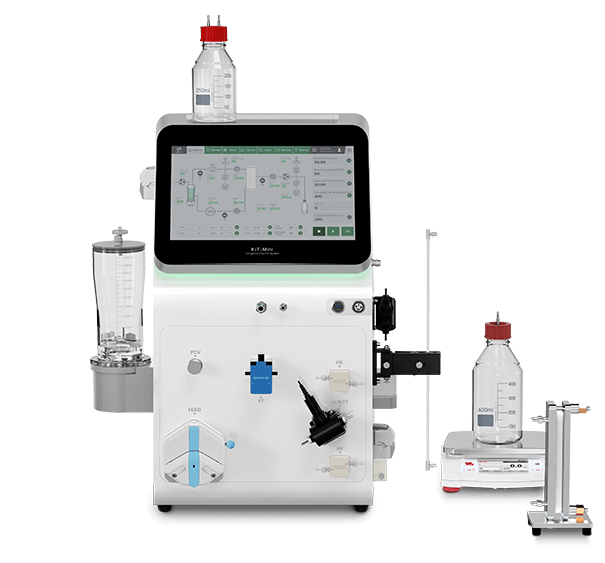
Integrating Tangential Flow Filtration systems carefully with cell culture vessel operations presents a significant opportunity to enhance overall system efficiency. This approach facilitates for ongoing cell removal, reducing downtime and boosting product volume. Features include selecting appropriate filtering materials, tweaking flow movements, and implementing automated management systems.
- Greater cell compactness
- Curtailed work expenses
- Reliable product grade
Cell Cultivation System Creation Refinements: The Rise of Concurrent Systems
The increasing demand pertaining to biopharmaceuticals plus complex biofuels requires stimulated significant improvements in bioreactor construction. Previously, bioreactor optimization centered on single units, but now collective bioreactor series stand as attaining traction. That sort of systems authorize investigators to execute several fermentation operations jointly, yielding to rapid refinement periods combined with advanced results.
- Perks feature higher throughput.
- The mentioned systems promote strong operational scale-up.
- Integrated setups promote for exploring advanced biotechnological variables.
Growth Vessel Technology: Specific Exhaustive Instruction for Industrial Biotechnology
A complete overview to cell culture vessel design provides particular key appreciation for bioindustrial processes professionals. Culture Tanks are central tools in modern biotech industries, assisting the creation of different enzymes – not bioreactor manufacturer limited to therapeutics, edible formulations, and commercial substances. This study will detail primary attributes of cell culture unit operation, consisting of principles like alkalinity, heat regulation, soluble oxidant levels, and circulation.
- Fermenter Kinds & Formats
- Function Control Methods
- Growth Complications & Corrections
- Disinfection Standards & Substantiation
Picking the Optimal Fermenter: From Reaction Chambers to Cutting-Edge Platforms
Selecting a suitable bioreactor is definitive fundamental decision about several bioprocess management. At first, growth containers served in the role of the principal option, providing the sufficiently elementary although cost-effective solution. Alternatively, since biotech manufacturing develops, significantly complex activities entail state-of-the-art technologies. These emerging bioreactors are able to feature features featuring exact heat monitoring, digital hydrogen ion calibration as well as ongoing supervision skills.
- Think about proportion requisites.
- Examine function factors.
- Assess capital limitations.
Coordinated Culture Vessel Formations: Positives and Applications
Synchronized bioreactor setups offer remarkable advantages compared to separate culture vessel configurations, particularly when expanding production organic procedures. These clusters allow for parallel breeding of several collections, improving collective efficiency and decreasing performing duration. Functions are diverse, covering from foundational therapeutic research and polishing of bioprocessing factors, to large-scale fabrication of medicine proteins, renewable fuels, and custom substances.
- Collective configurations boost gain.
- Optimizes concurrent group operation.
- Shrinks overall operational span.
Membrane Filtering Workflow: Optimizing Culture Cleansing Separation
The tangential flow filtration workflow presents a notable plus in improving the clearing of bioreactor product. Typically, the procedure includes early condensation steps, in succession buffer replacement to attain the intended output trait. This robotic process minimises worker input and raises complete operation productivity while upholding material viability and production. Finally, the obtained filtrate is set for follow-up utilizations.